1. Product Introduction
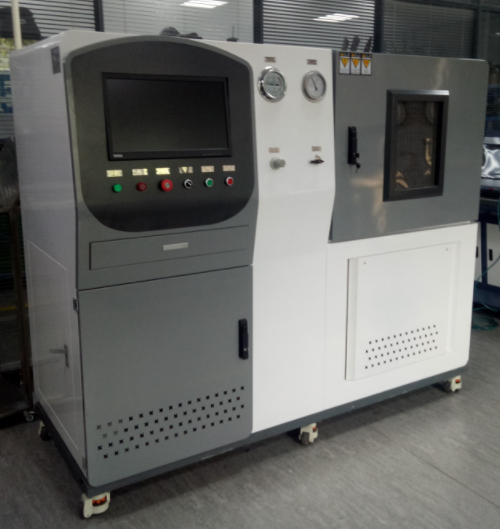
The high-pressure hydraulic pulse testing machine developed by Jinan SUPER Technology Co., Ltd. is mainly used for pulse pressure tests of pipes, radiators, water cooling plates, cooling components, gas cylinders, valves, pressure vessels and other products.
Its test pressure ranges from 0 to 80 MPa, and the whole process is controlled by a computer. Equipped with a data acquisition and processing system, it can collect and store pressure waveform data in real time.
The equipment supports optional working media including clean water and water-glycol mixture for fatigue testing of workpieces.
II. Technical Specifications of High-Pressure Hydraulic Pulse Testing Machine
Factory Operating Environment
Power supply: AC380V (+15%/-10%), 50Hz, 25kW
Laboratory temperature: 10~35℃
Humidity: 20~90%RH
Well-ventilated environment is required.
Rated test pressure: 0~150MPa
Mounting angle: 180° or 90°
Test media: high-temperature resistant, flame-retardant and low-volatility fluids
III. Advantages & Features of High-Pressure Pulse Testing Machine
The medium circuit adopts high-quality SUS304 stainless steel pipelines. Test piece ports are equipped with 7/16 stainless steel adapters for easy and reliable installation.
The overall noise level of the equipment shall not exceed 70dB(A), measured by a handheld sound level meter at a distance of 1m from the unit. Pipelines and circuits shall be clearly labeled with attached drawings; third-party calibration certificates shall be provided for pressure gauges and other instruments.
Measurable & recordable parameters: environmental chamber temperature, medium temperature, terminal pressure of test piece, pipeline pressure, test duration, test cycles.
Data Acquisition & Processing System
(A) Real-time collection and storage of pressure waveform data.
(B) Main collected and processed parameters: pressurization waveform, pressure value, oil temperature, environmental temperature of test chamber, test start/end/running time, test cycle count, pressure and cycle count at leakage occurrence, etc.
(C) Data storage & export: collected data can be exported as editable files; output formats include tables and curves. Real-time display of pressure-time curves with full printing support; mouse functions for local curve zooming and data tracking. Built-in database for storing and retrieving historical measurement data; automatic report generation and printing for real-time operating data and curves.
(D) The measurement & control software features user-friendly communication and human-machine interface, supporting graphical dynamic display of system operation. It displays all measurement & control parameters and pressure-time curves in tables and graphics, and allows setting of measurement instruments and control components.
(E) Equipped with leakage detection and feedback control functions for each workpiece to timely identify product failure.
Precautions for Operation
Prioritize safety to protect operators and the surrounding environment.
Operate in strict accordance with the equipment manual and comply with relevant regulations and operating procedures.
Keep the equipment clean and dry to guarantee its normal service life.
Remove impurities and air inside the system before startup to ensure accurate and reliable test results.
Fully preheat and commission the equipment before carrying out high-pressure pulse tests to guarantee stable operation.
Clean and maintain the equipment after testing to prevent damage and avoid deviations in subsequent test data.
Monitor test indicators in real time and record test results during the test for later analysis and evaluation.
Abide by the rated operating range and limits of the equipment; do not overload or misuse the equipment.
qicheshiyanji-q
Hydrogen Refueling Gun Air Tightness Testing Machine
This testing machine is mainly used for air tightness performance and hydrostatic strength tests of hydrogen refueling ports and hydrogen refueling guns for automotive fuel cells.
It complies with national standards including GB/T 34425 Fuel cell electric vehicles — Hydrogen refueling guns, GB/T 26779-2021 Fuel cell electric vehicles — Hydrogen refueling ports and GB/T 31138-2022.
According to test items, required test pressure and holding duration, each test function is assigned to independent functional modules. The modular design maximizes equipment utilization and improves testing efficiency.
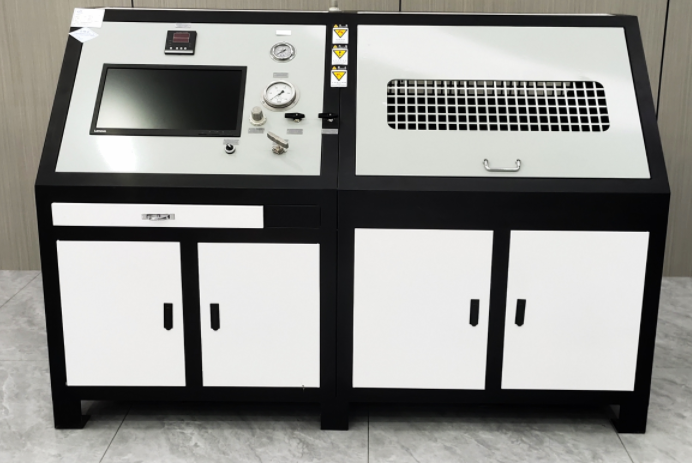
Chip Cold Plate Burst Pressure Test Bench
This test bench is mainly used for pressure resistance and burst tests of heat dissipation cold plates and chips.
The equipment is equipped with automatic control system software to realize automatic pressure control and regulation, together with a matched data acquisition system.
It supports exporting test reports in Excel format and storing all test data.

Battery Housing Air Tightness Testing Machine
This tester is mainly used for air tightness inspection of new energy battery housings.
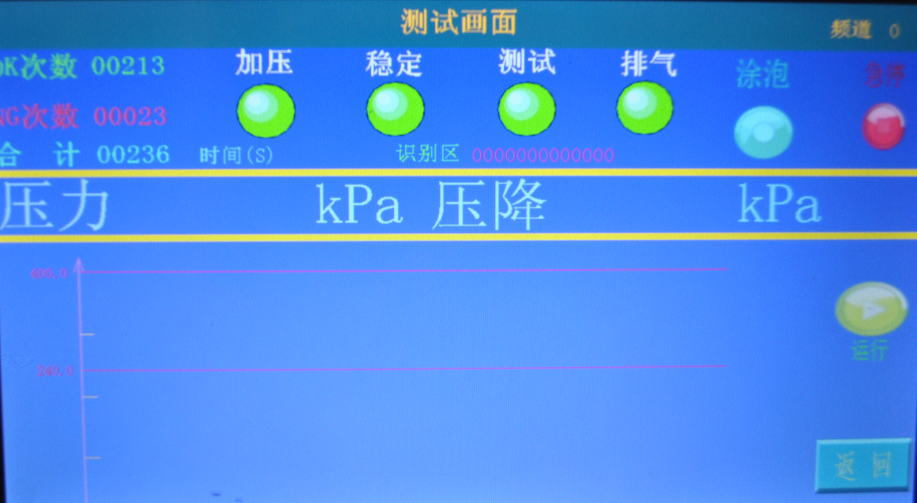
It adopts differential pressure measurement technology. The working principle is as follows: connect port A of the differential pressure sensor to a reference workpiece and port B to the test workpiece. The system automatically compares the real-time differential pressure readings with preset parameters. If the workpiece fails to meet the specified requirements, the machine will trigger automatic audible and visual alarms.
Hydrogen Refueling Port Temperature Cycling Test Machine
This machine can simulate various temperature and humidity environments and is mainly used for temperature cycling tests of hydrogen refueling ports.
It is equipped with protection systems including high-pressure control, overpressure protection and overload protection to ensure safe operation.
The equipment complies with GB 26779.
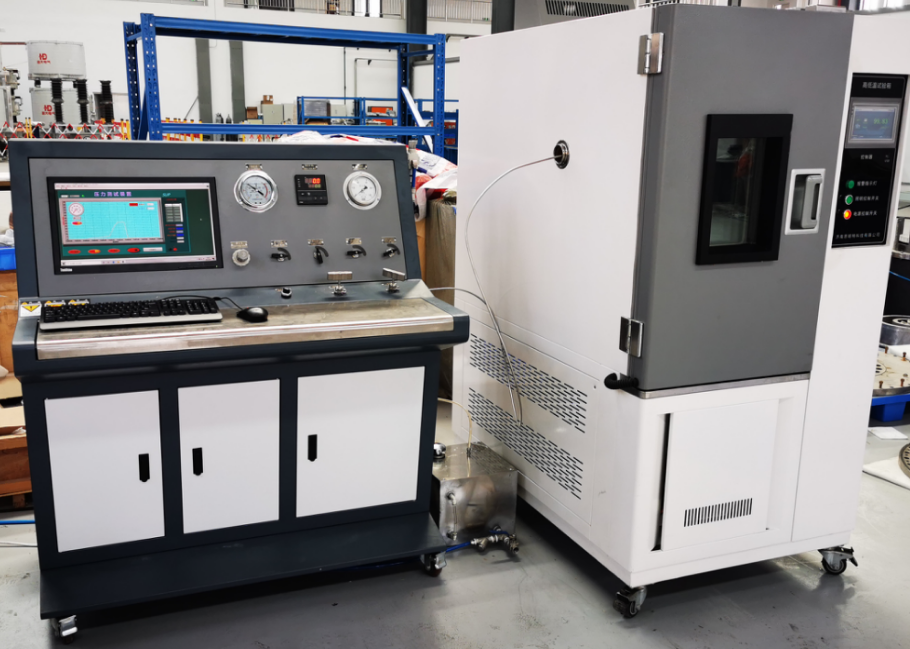
Aviation Hydraulic Quick-Disconnect Self-Sealing Valve Test Bench
This test bench is mainly used for hydrostatic pressure resistance tests of aviation hydraulic quick-disconnect self-sealing valves.
Integrating mechanical, electrical, hydraulic systems and circulating storage of test medium, it features complete functions, stable performance and high automation. The entire test procedure adopts hydraulic transmission and electrical control, applying no external force that would interfere with test results on the tested valves.

|