I. Application Scope:
Pulse testing applies short-interval pulses with a sufficiently high power supply to the device under test, generating high-quality measurable signals, and then removes the signal source. By reducing the Joule heating effect, pulse testing avoids potential damage to small nanoscale devices and serves as a measurement technique that reduces the overall energy consumption of the product.
The Jinan SUPER pulse testing machine is primarily used for factory testing of the following components: automotive hoses, including steering hoses, brake hoses, air conditioning hoses, fuel hoses, cooling water hoses, radiator hoses, intercoolers, radiators, oil coolers, water tanks, evaporators, condensers, heaters, air conditioning lines, coolant lines, heater hoses, air filter hoses, turbocharger system hoses, and engineering hydraulic hoses; aviation hoses and manifolds; other rigid pipes or connectors, as well as pulse testing for automotive brake pumps, radiators, oil coolers, and cylinder blocks.
II. Basic Parameters:
Test medium: Oil, water, or ethylene glycol mixture
Pulse pressure: 0-70 MPa (adjustable)
Pressure control accuracy: 0.01 MPa
Pulse frequency: 5-30 cycles per minute (adjustable)
Pulse pressure waveform: Basic square wave (or trapezoidal wave), pulse width adjustment can be customized according to your company's requirements.
Test medium temperature: Room temperature to 130°C (as per customer requirements)
The test can be conducted for over 500,000 cycles continuously for more than 30 days, and no leakage or deformation should occur during the seal performance test.
III. Equipment Composition:
The test bench consists of six main parts:
Filling System: Comprising a liquid level sensor, collection tank, filter, and pneumatically controlled filling ball valve. This system completes the filling and replenishment of the medium throughout the entire circulation system. It is open to the atmosphere and forms a filling and exhaust open-loop circulation circuit with the exhaust system.
Exhaust System: Comprising a pneumatically controlled exhaust ball valve, exhaust collection tank, liquid level sensor, and exhaust valve. Thorough exhaust is crucial for generating the pressure waveform and is a necessary condition for its production. This system is installed at the upper end of the system pipeline to facilitate exhaust.
Heating System: A wet heating system for the liquid circulation working medium that maintains the set temperature of the pulse test medium, keeping the entire circulation system in a set thermal equilibrium. This system consists of a high-temperature circulation pump, collection tank, heater, and temperature sensor.
Pulse Power System: Provides a constant pressure source for the pulse generation device and includes a pressure switching device. This system comprises components such as a hydraulic tank, hydraulic pump, hydraulic valve, accumulator, filter, and pressure relay.
Pulse Pressure Servo Control System: The core of the equipment, consisting of a servo valve, oil cylinder, etc.
Circulation System: Divided into a large circulation system and a small circulation system, comprising a heater, circulation pump, pneumatically controlled valve, throttle valve, filter, and pneumatically controlled valve. The small circulation system is used for idle operation without a workpiece for equipment debugging and checking the initial operating status of each system. After confirming that all systems are normal, the pneumatically controlled ball valve is closed, and the passage to the test environment chamber is opened to enter the large circulation test phase.
IV. Model Selection
Product Name |
Pulse test bench |
Model |
SUP_MCSYT |
Basic Principle |
Depending on the pressure, the high-pressure pump generates high-pressure liquid, which is delivered to the test specimen through the pressure control system via a high-pressure hose to carry out the pulse test. |
Performance Parameters |
Test Pressure |
0~70MPa(压力可选) |
Pressure Control Accuracy |
+2% of the upper limit and -1% of the lower limit of the test pressure value |
Pressure Value Resolution |
0.01bar |
Pulse frequency |
5-30 times/min |
Test medium |
Water or hydraulic oil |
Operation Mode |
computer |
Temperature control accuracy |
Mean deviation: ±1°C, deviation: ±2°C |
Specimen mounting method
|
Manual or automatic clamping |
Structural composition |
Power system, circulation system, pressure control system, workpiece mounting device, computer control. |
Scope of application |
Radiator, intercooler, condenser, high-pressure hose, rubber hose, etc. |
Related Products:

The fully automatic control pulse testing machine from Jinan Simulate is controlled automatically by computer software, enabling unmanned automatic operation. It features various abnormal condition judgment functions, facilitating automatic control. This machine is used for testing rubber hoses, water tanks, water pipes, coolers, intercoolers, heat exchangers, connectors, pipelines, and other components. Compared to hydraulic pressure testing, oil pressure testing allows for high-temperature testing of the medium.
For more details, please click:Fully Automatic Control Pulse Testing Machine
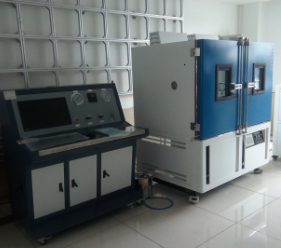
The filter housing pulse vibration testing machine is designed for conducting pulse tests on filter housings under high-frequency vibration conditions to inspect their fatigue life. This testing machine allows for the setting of vibration directions, including up, down, front, back, left, and right, as well as the vibration frequency.
maichongshiyanji-m
The pressure alternation equipment for microchannel tubes in liquid cooling plates is primarily utilized for conducting pulse tests, pressure drop (flow resistance) tests, high/low-temperature resistance tests, environmental high/low-temperature alternation tests, medium temperature alternation tests, and coupled pulse/medium temperature alternation tests on liquid cooling plates, direct cooling plates, and microchannel tubes.

The pressure alternation testing machine for liquid cooling plates, developed by Jinan SUPER Technology Co., Ltd., is primarily used for conducting pressure alternation tests on liquid cooling plates to inspect for faults, quality changes, and operational reliability after temperature and pressure variations in the product materials. The testing machine features microcomputer control, software display, simple operation, clear display, and automatic alarm functions, making it an essential inspection instrument for various research institutions, national quality inspection agencies, and liquid cooling plate manufacturers.

The PVT (Pressure-Volume-Temperature) testing bench for cooling water pipes, developed by Jinan SUPER Technology Co., Ltd., is a pressure pulse testing machine equipped with linear and eccentric motion devices. It is primarily designed for conducting PVT tests on cooling water pipes. This testing bench is integrated with Simulate's data acquisition software, which offers functions for data and report processing. It provides a dedicated report editing tool tailored for graphical layout, featuring flexible operation and ease of learning. This enables convenient printing of test curves and test values.

The water purifier cycle life testing machine is primarily used for conducting cycle life and water hammer performance tests on water purifiers. The test chamber of this machine is constructed entirely from stainless steel and features a transparent viewing window. It is controlled by a microcomputer, providing real-time display of current pressure, pressure curves, and test data. The machine automatically records and stores parameters such as pressure, time, and cycle count, enabling the generation, saving, printing, and querying of test reports. Additionally, it includes an alarm and automatic shutdown function in case of test abnormalities.
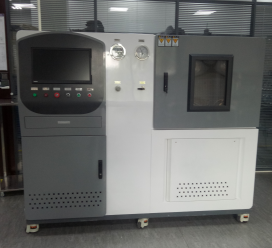
The aviation conduit water hammer pulse testing machine is primarily designed for conducting water hammer pulse tests on aviation conduits. By simulating the actual working conditions of aviation conduits, it performs tests in accordance with relevant technical standards and requirements to evaluate the performance of the tubing materials. This testing machine features automatic data acquisition and processing capabilities, automatically establishes a test database for easy querying at any time, and allows for data storage.

The hydrogen repeated pressurization testing system is utilized for tests related to hydrogen-powered vehicles, encompassing components such as hydrogen valves, pressure relief valves, hydrogen connectors, and other hydrogen-related fittings. The product is capable of withstanding test pressures up to 80 MPa and can automatically pressurize hydrogen. The system is equipped with an automatic control system that manages pressure pressurization and release, and it also includes a temperature chamber to simulate high and low-temperature environments. The software configured for the system is developed for control purposes. This system is designed to conduct life tests on hydrogen pressure-resistant components and assess hydrogen embrittlement, among other testing objectives.

Other Products: The hydraulic hose pulse testing bench is primarily designed for conducting pulse tests on various types of tubing, including hydraulic hoses, cooling water pipes, steering pipes, air conditioning pipes, fuel pipes, and heater hoses. It offers the flexibility of computer-controlled or manual operation based on user requirements. Equipped with a dedicated data acquisition system, it provides real-time display of various parameters, allows for printing of test reports, and facilitates the storage of test data.

Further product selection models are listed below:
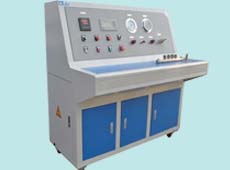
Universal Pulse Fatigue Testing Machine
| |
|
|
 |
Semi-Automated Pulse Testing Machine |
|
|
Dedicated pulse fatigue tester
| |
 |
Pressure Sensor and Pressure Gauge Fatigue Testing Machine |
|
|
|
|

|